

Illustrative consultation about jaw-joint movement and discomfort
Specialized Care

TMJ Assessment in Etobicoke

Coming in from Etobicoke is a longer trip, so a jaw assessment should count. Arrive prepared, leave with a clear plan, and know which symptoms are better handled by urgent care closer to home. We review your history, jaw movement and dental findings, then explain whether monitoring, conservative care, imaging or a referral fits.

Planning a jaw visit from Etobicoke

One well-prepared appointment can do a lot of the work.

When the clinic isn't around the corner, preparation pays off. A short written timeline of your jaw symptoms, a list of what you've tried, any old reports and the appliance you were given can turn a first visit into a genuinely useful one. It also means fewer loose ends that would otherwise need another trip.

The jaw joints sit in front of each ear and work with the chewing muscles whenever you eat, speak or yawn. A TMJ assessment considers them as one part of a larger picture that includes your teeth and general health. It is a process of questions and a focused examination, not a single test. Pain that might be from a tooth, a click that has never hurt and a jaw that suddenly won't open each lead somewhere different.

Tell us when booking what made you call and what you now find difficult. If a long session is hard, or you can't open far, mention that too. We'll plan the examination around your concern and be clear if a dental, medical or specialist assessment, possibly closer to where you live, would answer a remaining question better.

Plan your jaw assessment
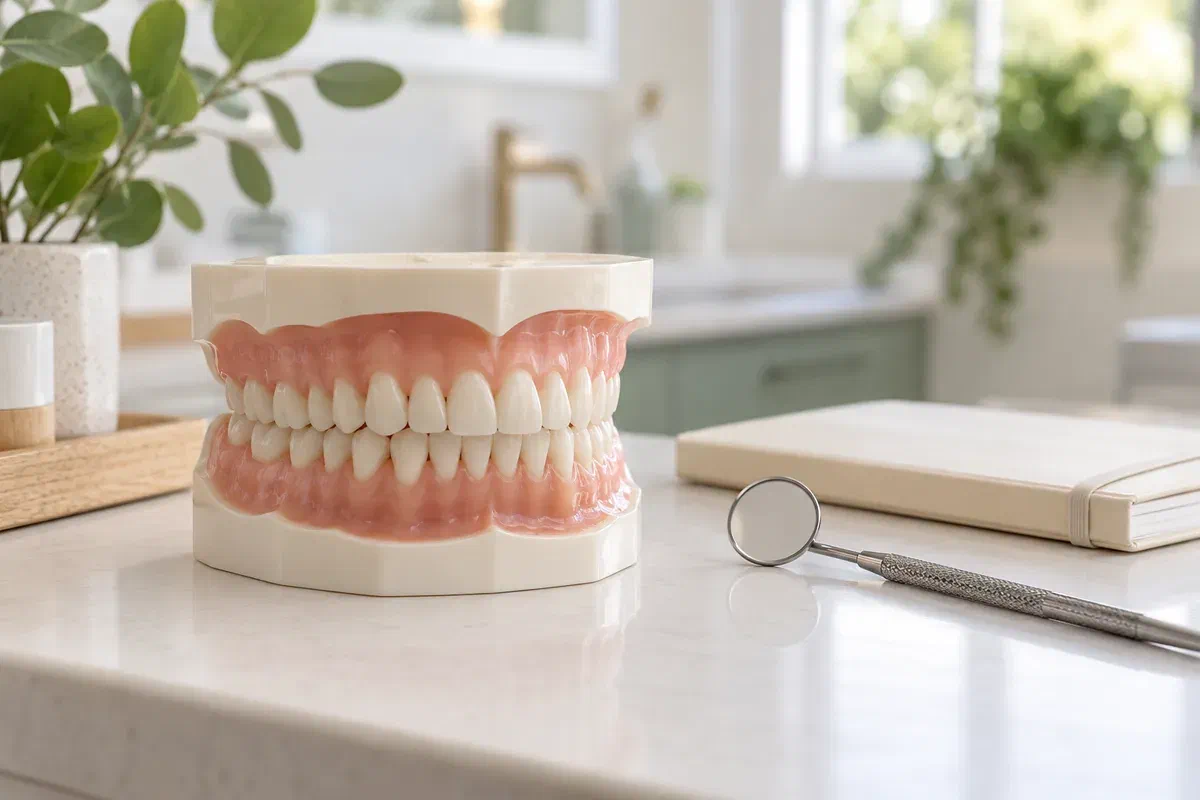
Illustrative supported dental teaching cast beside a mirror and closed notebook
Prepare these before you travel

A written timeline saves time in the chair.

Note when it started, what's changed and whether symptoms are steady or intermittent. A diagnosis isn't your job, and you won't need to keep repeating a painful movement to show us.

Where and when the discomfort appears

Write down the sore spot and the triggers: chewing, opening wide, mornings, long calls. Add a tooth that feels sensitive and any pain elsewhere in the face. With that list in hand, the clinician can consider several causes in one sitting rather than assuming the joint is behind everything.

Changes in opening, closing or the bite

Note any catching, restriction or new feeling in how your teeth meet, and whether it followed an injury. Don't force your jaw to reproduce it. A jaw that suddenly won't open or close normally needs prompt advice, and from Etobicoke that may mean contacting urgent care nearby first.

Sounds and what they do to daily life

Say whether a noise is painful, linked with locking, or simply noticeable. On its own a sound doesn't decide whether treatment is needed, and loudness doesn't measure damage. It is weighed alongside movement, symptoms and your history.

After a recent injury, or with significant swelling, fever or sudden movement difficulty, call promptly. For serious symptoms or if you can't eat or drink, seek urgent medical care close to home rather than making the drive for a routine jaw visit.

What a single visit can settle

Leave knowing what's likely, what's uncertain, and who handles what.

A careful assessment helps separate a likely dental cause from findings in the muscles or joint, and both from symptoms that need another provider. Ask for the reasoning in plain words. Sometimes monitoring or simple care is enough. Sometimes more information is required, and knowing that early lets you arrange it efficiently, perhaps closer to home.

The visit also leaves a reference point. A record of your current symptoms and limits means any review, whether in person or by phone where suitable, has something concrete to compare against. The aim isn't a lifelong label from one appointment; it's a plan you can follow without needing to come back for every question.

Patient information: NIDCR — history, examination, and diagnostic considerations for TMD

The impact on your everyday routine

Explain what has become difficult, from a full meal to a long commute spent clenching. Those details help more than a number on a scale and guide what any care should aim for. Let us know which goals matter most to you.

A focused, efficient examination

Because a return trip takes planning, the clinician aims to cover the joints, chewing muscles, teeth and the way your jaw moves in the same sitting where that is reasonable. Point out the moment something feels like your familiar ache, and say when it feels new. Breaks are fine, and nothing is pushed past comfort.

Clear reasons for any test or referral

If imaging or another assessment is suggested, ask what it would answer and whether it could be done nearer to you. Not every jaw problem needs a test. If the plan is monitoring, ask what to watch for and when a visit would be warranted.

How the appointment works

Built around getting answers in one trip

Mention limited opening or difficulty with long visits when you book. Bring earlier imaging reports if they're easy to find, but don't hold back on calling about a new symptom while you gather them.

  1. Go through your prepared history

    We cover when it began, how it has changed, injuries, dental and medical history, and any guards or exercises you've tried. Your notes help here. Mention what helped and what didn't, and if symptoms vary, describe the usual pattern rather than just today.

  2. Examine what your history points to

    The clinician observes jaw movement and checks the relevant joints, muscles and teeth. You may be asked whether pressure or a movement feels like your usual symptom. Say so if anything hurts; forcing your jaw open isn't part of a good assessment.

  3. Explain findings and uncertainty

    Ask what seems most significant, what else was considered and how firm a working diagnosis can be right now. Some questions need further investigation. A normal-looking finding doesn't mean the pain isn't real or that the discussion stops there.

  4. Agree a plan that limits extra trips

    Discuss monitoring, conservative guidance, a test or referral, and which parts could happen closer to you. Ask who arranges each step and how results are shared. Make sure you know which new symptoms need a call and which need nearby urgent care.

Back in Etobicoke

Know what to do at home and when to call.

You may leave with advice to try, a review date, or a referral. If anything is unclear, especially who books the next step, ask before you leave so you aren't chasing answers from a distance.

Follow the advice suited to your findings

Try the comfort or activity changes discussed, within the limits agreed. Avoid forceful exercises or self-repositioning techniques from the internet. If something makes your jaw worse, stop and check in by phone with the provider.

Keep brief notes instead of constant checks

Note whether eating, opening and daily comfort are better or worse, and anything new. Avoid repeatedly clicking or measuring your jaw. A practical summary makes any follow-up, in person or by phone, quicker and more useful.

Line up any referral or test

Confirm where imaging or another appointment will happen, who will book it and who will explain results. If distance or timing makes something hard, tell the team; there may be an option closer to you.

Paths after your assessment

Choosing what fits, including what can happen nearby

Being examined doesn't commit you to treatment. Ask why a particular route suits you, which pieces could be handled near home, and what kind of change would prompt a different approach at review.

When active treatment isn't needed

Explanation and monitoring

A painless click or a stable finding may be explained without any device or procedure. Ask what change would be meaningful and whether a review is needed at all. Monitoring is a plan, not a reason to ignore new pain or reduced function.

When initial symptom management is appropriate

Conservative care you can manage at home

Practical measures may be suggested, with a set point to review their effect. Ask what to try and when to check in. The plan should be specific enough to follow from a distance and open to change if symptoms persist.

When more information is needed

Imaging or another provider, possibly closer

Different investigations answer different questions, and a medical or specialist referral may help more than further dental work. Ask what the result could change and who will explain it. Images are read with your symptoms and exam, not as the full answer.

Questions from Etobicoke

Practical answers before you make the trip

Ask about the limits of testing and the reasons behind a recommendation. The visit should leave your concern clearer, not more confusing.

(905) 876-4488
Can I get most of the assessment done in one appointment?
Often the history and examination can be completed in a single visit, especially if you come prepared. Further tests or referrals may still be needed, but the plan for them can usually be set during that first appointment.
What should I do if my jaw locks at night and I'm far from the clinic?
Don’t force it. Call for advice when you can, and if you cannot eat or drink, have significant swelling or other serious symptoms, seek urgent medical care nearby.
Is it helpful to write my symptoms down before coming in?
Yes. A short timeline of onset, triggers, what you’ve tried and what changed makes the history quicker and more complete, and it helps if you’re nervous or likely to forget details.
Can follow-up be handled by phone instead of another visit?
Sometimes a check-in by phone is reasonable, depending on your findings. Some reviews need an examination in person. Ask the team which applies to your plan.
If I need imaging, does it have to be done at the clinic?
Not always. Depending on the type of image, it may be arranged elsewhere. Ask where it can be done and how the results will reach the clinician who will explain them.
Should I take time off work for a jaw assessment?
Allow enough time for a thorough history and examination plus travel. Ask the team about appointment length when booking so you can plan your day.
Booking from Etobicoke

Come prepared, leave with a plan.

Contact Milton Dental Clinic about jaw discomfort, changes in movement or advice you'd like reviewed. If the jaw has recently locked or you've had an injury, tell us when you call so we can help decide whether to come in or seek care closer to home.

You might leave with a plan to watch and wait, home measures, a test to arrange or a referral elsewhere.

Visit Milton Dental Clinic
Unit 1, 342 Bronte St. S, Milton, ON L9T 5B7
Get directions Clinic hours
Monday–Thursday
11am–7pm
Friday–Sunday
By appointment only

Areas we serve

  • Milton
  • Oakville
  • Mississauga
  • Georgetown
  • Halton Hills
  • Acton
  • Campbellville
  • Brampton
  • Burlington
  • Puslinch
  • Rockwood
  • Erin
  • Caledon
  • Etobicoke
  • Old Milton
  • Bronte Meadows
  • Timberlea
  • Dorset Park
  • Dempsey
  • Clarke
  • Beaty
  • Coates
  • Harrison
  • Scott
  • Willmott
  • Ford
  • Bowes
  • Cobden
  • Walker
  • Mountain View
  • Milton Heights
  • Hawthorne Village
  • Valley View
  • Fallingbrook
  • Nassagaweya
  • Trafalgar
  • Esquesing
  • Nelson
  • Brookville
  • Moffat
  • Glen Williams
  • Norval
  • Limehouse
  • Stewarttown
  • Ashgrove
  • Hornby
  • Silver Creek
  • Speyside
  • Scotch Block
  • North Oakville
  • River Oaks
  • Glen Abbey
  • West Oak Trails
  • Palermo
  • Bronte Creek
  • College Park
  • Joshua Creek
  • Uptown Core
  • Preserve
  • Iroquois Ridge
  • Lisgar
  • Meadowvale
  • Meadowvale Village
  • Churchill Meadows
  • Erin Mills
  • Central Erin Mills
  • Streetsville
  • East Credit
  • Creditview
  • Heartland
  • Sheridan
  • Mount Pleasant
  • Credit Valley
  • Huttonville
  • Churchville
  • Springbrook
  • Northwest Brampton
  • Bram West
  • Fletcher's Meadow
  • Fletcher's Creek South
  • Alton Village
  • Orchard
  • Millcroft
  • Headon Forest
  • Tansley
  • Brant Hills
  • Tyandaga
  • Kilbride
  • Lowville
  • Aberfoyle
  • Morriston
  • Arkell
  • Hillsburgh
  • Freelton
  • Carlisle
  • Waterdown
  • Flamborough
  • Mountsberg

How can we help?

Milton Dental Clinic

Have a question about your smile? Choose the option that works best for you.

For urgent dental concerns, please call.
Messages are reviewed during clinic hours.