
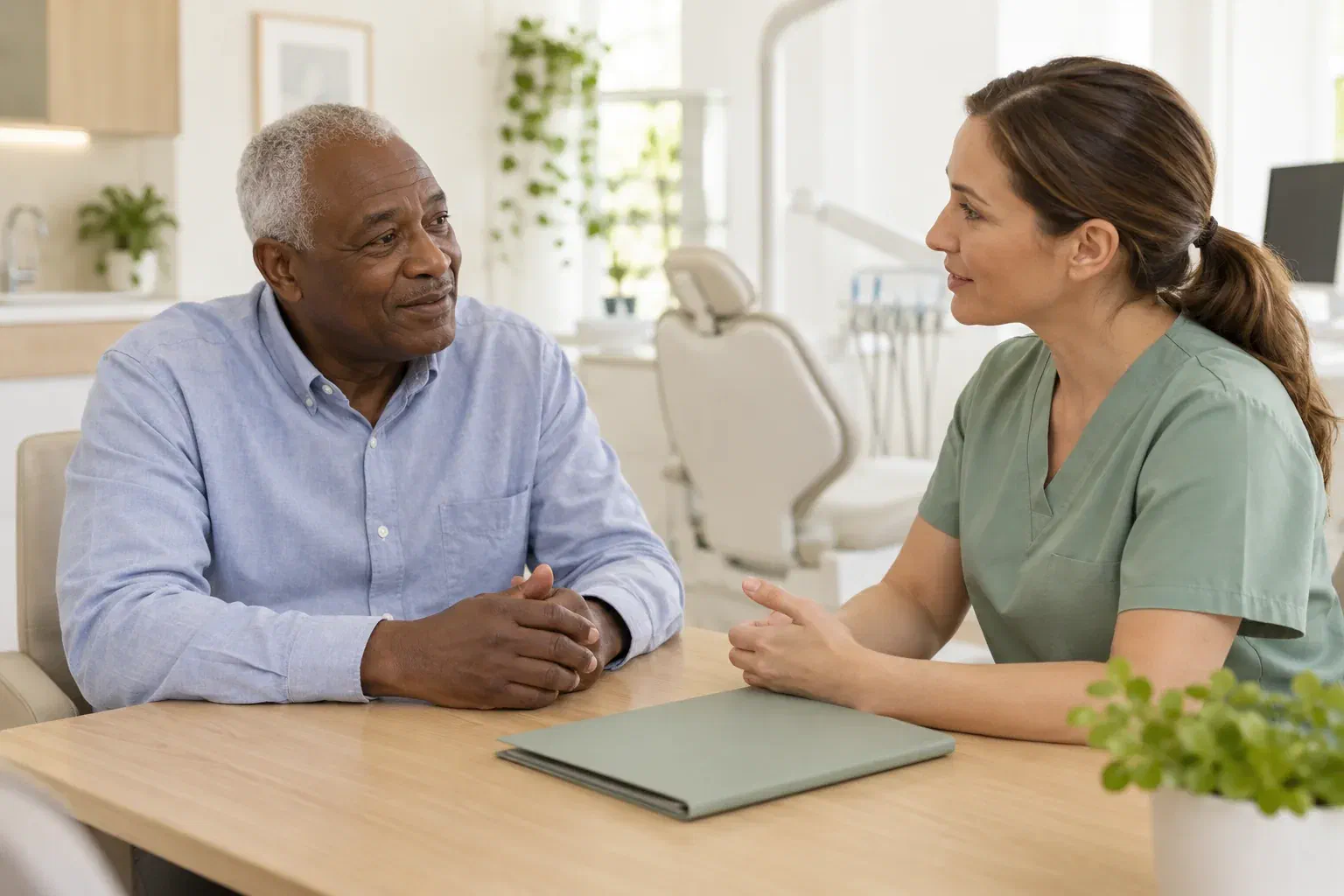
Illustrative consultation about jaw-joint movement and discomfort
Specialized Care

TMJ Assessment in Oakville

Is it a back tooth, the chewing muscles or the joint itself? That is often the first thing people coming from Oakville want to know. A TMJ assessment weighs your symptoms, jaw movement and dental findings, then explains whether monitoring, conservative care, imaging or another assessment fits best.

Tooth, muscle or joint?

Sorting out where the ache really starts

Pain along the side of the face is surprisingly hard to pin down. A cracked molar, tight chewing muscles and an irritated jaw joint can all feel alike, and they can even happen together. The temporomandibular joints sit just ahead of each ear and work alongside those muscles whenever you bite, talk or swallow. A TMJ assessment keeps all of these possibilities in view instead of starting from the assumption that the joint is to blame.

Rather than one decisive test, the process combines a detailed conversation with an examination guided by what you say. The meaning of a symptom depends on its context. A noise that has never hurt carries different weight from opening that has recently become limited, and soreness near the joint may still come from somewhere else.

For anyone making the trip up from Oakville, it helps to arrive with the details in mind: what made you book, what you now avoid doing, and any earlier advice or records. Bring a splint or reports if you have them. We can then focus the visit, and say when a dental, medical or specialist colleague is better placed to answer a particular question.

Book a visit to sort out your jaw pain
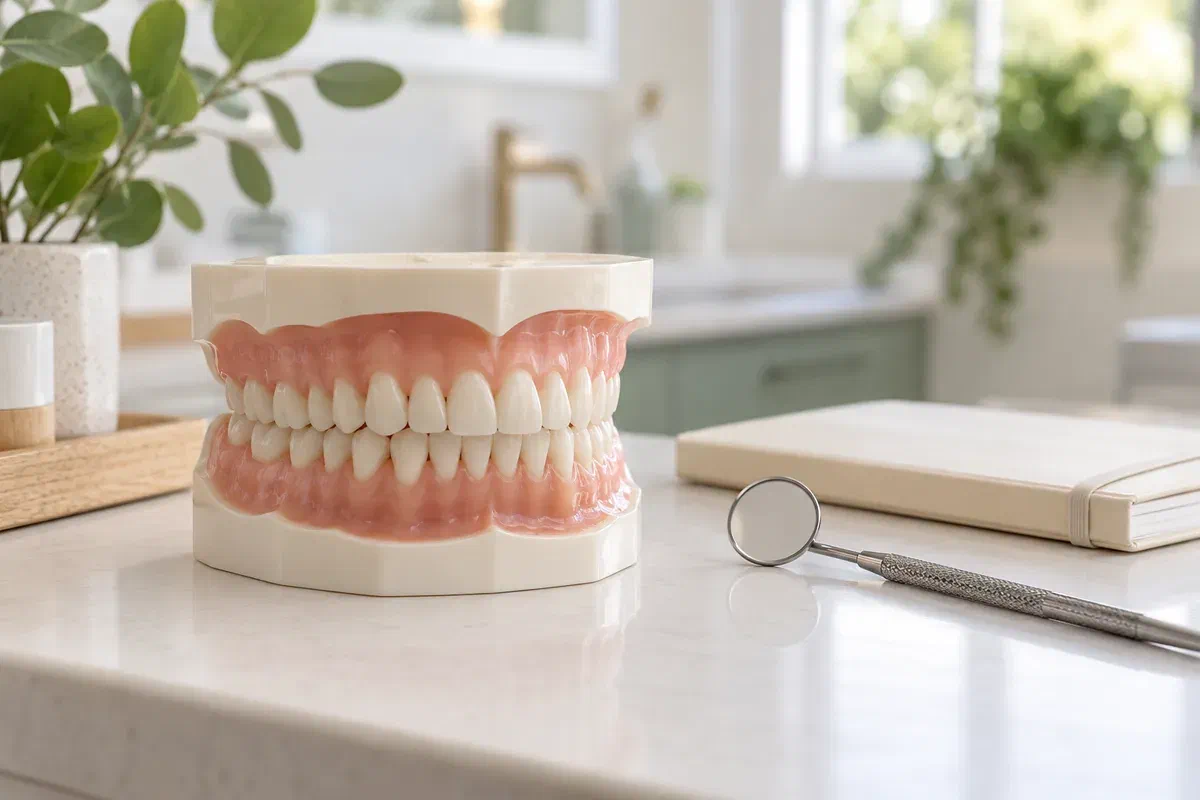
Illustrative supported dental teaching cast beside a mirror and closed notebook
Clues that narrow things down

Small details in your story often point the way.

Explain how the problem began, how it has developed, and whether it is steady or intermittent. You are not expected to have worked out the cause, and painful movements will not be demanded over and over.

Is the pain in one tooth, or spread across the face?

Describe whether the discomfort feels pinpoint or broad, and whether it arrives with biting, wide opening, waking or seemingly at random. Mention hot or cold sensitivity in a tooth and aches elsewhere. These details help keep a dental cause in mind alongside muscle and joint explanations.

Movement that feels restricted or a bite that has shifted

Tell us about catching, stiffness or teeth that now seem to meet differently, and whether this followed a blow to the face. There is no need to force the jaw to show us. If it suddenly cannot open or close as normal, call for advice promptly rather than holding out for a routine appointment.

Sounds from the joint and whether they matter to you

Note whether a click or grating noise hurts, comes with locking or is just noticeable. A sound by itself does not establish that treatment is needed, and a loud one is not proof of damage. The clinician interprets it together with your movement, symptoms and history.

Phone soon after a recent injury, or if you notice significant swelling, fever or sudden difficulty moving your jaw. Serious accompanying symptoms, or being unable to eat or drink, call for urgent medical care rather than a routine dental visit.

What a good assessment sorts out

Separating likely causes from the questions still open

One of the most useful outcomes is a clearer split between a tooth problem, muscle or joint findings, and symptoms that belong with another provider. Ask the clinician to walk you through the reasoning without jargon. Sometimes the right next step is simple care or monitoring; sometimes more information is needed before anything specific is recommended.

The assessment also sets a baseline. Writing down how your symptoms behave now, and what they stop you doing, makes any later comparison far more meaningful. Rather than fixing a permanent label after one visit, the aim is to give you a plan that makes sense and a clear point to revisit it.

Patient information: NIDCR — history, examination, and diagnostic considerations for TMD

How the problem is affecting your days

Explain which routines have become uncomfortable and which matter most to you to get back. Avoiding certain foods, or dreading a long dental cleaning, can be more telling than any pain rating. What you care about shapes the questions and the goals of whatever care follows.

A focused look at teeth, muscles and joints

Depending on your history, the clinician may check your teeth, jaw movement, both joints and the surrounding muscles. Say when pressure or a motion brings on your usual ache and when it feels different. The exam should stay within comfortable limits, with breaks whenever you ask.

A thought-out decision on tests and referrals

If an X-ray, scan or outside opinion is suggested, ask what it would show and how the answer could change your care. Not every jaw problem calls for the same investigation. If you are asked to watch and wait, find out what to look for and when to come back sooner.

Inside the appointment

Listen, examine, explain, plan.

Tell the team beforehand if you cannot open wide or find long visits difficult. Previous imaging reports are useful, though there is no reason to delay advice about a new problem while you search for them.

  1. Start with your history and past treatment

    The conversation covers when symptoms started, how they have changed, injuries, dental work, medical history and anything you have already tried, such as a guard or exercises. Mention what helped and what made things worse. If you feel fine today, describe how a typical bad day goes.

  2. Examine the teeth, muscles and joint movement

    Teeth get a close look here too, since a dental cause is one of the things being ruled in or out. Gentle pressure on the cheek and temple muscles and a few guided movements show how the jaw behaves. Tell us the moment something feels like your usual pain, and stop whenever it hurts.

  3. Talk through the findings and their limits

    You should hear which explanation looks most likely, which ones were set aside and why. Sometimes the honest answer is that a working diagnosis needs more information first. An exam that finds little is not a verdict that the pain is in your head, and it is fine to keep asking.

  4. Choose the next step and a review point

    Watching, practical self-care, an extra test or a referral are the usual choices. Before you leave, be clear on who books what and how you will hear about any results. Also agree on the warning signs that mean you should phone us before the review date.

Back home after the visit

A clear plan, and a reason to call if things change

You may leave with measures to try, a review date or a recommendation for another assessment. If you are unsure what comes next, what is optional or who is arranging it, ask for it to be clarified.

Follow the guidance that matches your findings

If a tooth was the likely culprit, the plan may be dental; if muscles or the joint were, it may be about habits and comfort. Stay within what was discussed. Online videos promising to pop a disc back are best skipped, and anything that makes the ache worse should be paused until you have asked.

Note changes without testing yourself constantly

A line or two each week is plenty: meals that felt easier or harder, mornings that were stiff, anything that is new. Clicking the jaw on purpose to see if it is still there tends to keep you focused on it. Bring the notes to your review instead.

Complete any recommended review or referral

When a scan or a visit elsewhere is part of the plan, find out who sets it up and who will sit down with you to go through what it shows. If dates or the drive make it awkward, say so early. You should never be left wondering whether the matter was dropped.

Where things may go from here

Three routes, chosen by what is still uncertain

Being examined does not mean treatment must follow. Ask why one approach fits better than another and what would make it worth changing at a later visit.

When the findings don't call for treatment

Reassurance and keeping watch

Sometimes the most useful outcome is learning that a sound or a finding is not something to treat right now. No appliance, no procedure, just a clear explanation. Ask what sort of change would alter that view. Keeping watch is a decision made on purpose, and new pain still deserves a call.

When managing symptoms first makes sense

Conservative steps to ease symptoms

Practical, low-key measures often come first, followed by a check on whether eating and talking feel any easier. You should know which steps are yours to take and when you are due back. If the ache hangs on, or the first explanation stops fitting, the plan gets revisited.

When more information is needed first

Imaging or another clinician's assessment

When the tooth-versus-joint question stays open, a dental X-ray, a different kind of image or a medical or specialist opinion may settle it better than more dental work. Find out what each option could reveal and who will explain it. Pictures are weighed against your symptoms and exam, never in isolation.

Asked by people coming from Oakville

Clearing up common jaw-pain questions

A good visit should leave the problem easier to understand. Feel free to ask what each test can show and why a recommendation is being made before you decide on any treatment.

(905) 876-4488
How can a dentist tell a toothache from jaw joint pain?
By combining your description with an examination of the teeth, muscles and jaw movement, and sometimes dental X-rays. The two can feel similar and can occur together, so the clinician considers both rather than settling on one too quickly.
Can a cracked or worn tooth cause pain that feels like TMJ?
It can. Some tooth problems produce pain that spreads toward the jaw or ear. Mention any tooth that is sensitive to biting or temperature, so it can be examined alongside the jaw itself.
Could my sinuses be behind upper jaw pain?
Sometimes pain in the upper teeth or cheeks is linked to other areas, including the sinuses. Tell the clinician about congestion or recent illness. If symptoms seem to point beyond dental causes, a medical review may be suggested.
Is it worth trying a store-bought mouthguard before my assessment?
It is usually better to discuss an appliance before using one, because a poorly suited device may not help and could aggravate some symptoms. If you have already tried one, bring it and describe your experience.
Will I be told to get a scan of my jaw?
Only if it could answer a relevant question and help guide care. Many jaw concerns are assessed without advanced imaging. Ask what a proposed test would show and how its result would change the plan.
What should I do if my jaw locks before the appointment?
Call for advice rather than forcing it. A jaw that suddenly will not open or close normally needs prompt attention. If you cannot eat or drink, or have other serious symptoms, seek urgent medical care.
Coming from Oakville?

Make sense of the ache before deciding on treatment.

Reach Milton Dental Clinic about a sore jaw, a tooth you suspect, a bite that has shifted or advice you were given elsewhere. If the jaw has stiffened suddenly or you were recently hurt, say so on the phone and we will help judge how soon you should be seen.

The visit may lead to monitoring, conservative advice, further investigation or a referral.

Visit Milton Dental Clinic
Unit 1, 342 Bronte St. S, Milton, ON L9T 5B7
Get directions Clinic hours
Monday–Thursday
11am–7pm
Friday–Sunday
By appointment only

Areas we serve

  • Milton
  • Oakville
  • Mississauga
  • Georgetown
  • Halton Hills
  • Acton
  • Campbellville
  • Brampton
  • Burlington
  • Puslinch
  • Rockwood
  • Erin
  • Caledon
  • Etobicoke
  • Old Milton
  • Bronte Meadows
  • Timberlea
  • Dorset Park
  • Dempsey
  • Clarke
  • Beaty
  • Coates
  • Harrison
  • Scott
  • Willmott
  • Ford
  • Bowes
  • Cobden
  • Walker
  • Mountain View
  • Milton Heights
  • Hawthorne Village
  • Valley View
  • Fallingbrook
  • Nassagaweya
  • Trafalgar
  • Esquesing
  • Nelson
  • Brookville
  • Moffat
  • Glen Williams
  • Norval
  • Limehouse
  • Stewarttown
  • Ashgrove
  • Hornby
  • Silver Creek
  • Speyside
  • Scotch Block
  • North Oakville
  • River Oaks
  • Glen Abbey
  • West Oak Trails
  • Palermo
  • Bronte Creek
  • College Park
  • Joshua Creek
  • Uptown Core
  • Preserve
  • Iroquois Ridge
  • Lisgar
  • Meadowvale
  • Meadowvale Village
  • Churchill Meadows
  • Erin Mills
  • Central Erin Mills
  • Streetsville
  • East Credit
  • Creditview
  • Heartland
  • Sheridan
  • Mount Pleasant
  • Credit Valley
  • Huttonville
  • Churchville
  • Springbrook
  • Northwest Brampton
  • Bram West
  • Fletcher's Meadow
  • Fletcher's Creek South
  • Alton Village
  • Orchard
  • Millcroft
  • Headon Forest
  • Tansley
  • Brant Hills
  • Tyandaga
  • Kilbride
  • Lowville
  • Aberfoyle
  • Morriston
  • Arkell
  • Hillsburgh
  • Freelton
  • Carlisle
  • Waterdown
  • Flamborough
  • Mountsberg

How can we help?

Milton Dental Clinic

Have a question about your smile? Choose the option that works best for you.

For urgent dental concerns, please call.
Messages are reviewed during clinic hours.