

Illustrative consultation about jaw-joint movement and discomfort
Specialized Care

TMJ Assessment in Puslinch

The most useful thing to take home from a jaw appointment is a plan you can actually follow. For people coming from Puslinch, a TMJ assessment covers your history, jaw movement and the teeth, and ends with a clear answer on what to watch, what to try, and when a test, review or referral would be worth the trip.

Planning beyond the first visit

What happens after the assessment matters just as much.

Many jaw concerns don't end with a single answer. More often, the first visit sets a direction: keep an eye on things, try a few practical changes, or find out more. For a rural household, it helps to know from the start how long that direction will take to judge, what you'll be looking for in the meantime, and whether another trip is likely.

The temporomandibular joints, just in front of each ear, guide the lower jaw with help from the chewing muscles. A TMJ assessment looks at those joints in the context of your teeth, your muscles and your overall health. It combines a detailed conversation with a hands-on examination rather than relying on one test. A painless sound, a jaw that has started to catch and an ache that could be dental all lead to different follow-up plans.

Before the visit, think about what made you call and what's become harder. Bring any reports, a guard you've used and notes on earlier advice. From Puslinch, it may also help to mention your travel and scheduling limits. We'll plan the examination around your concern and be upfront if another dentist, your physician or a specialist would be better placed to answer part of it.

Arrange an assessment with a clear follow-up
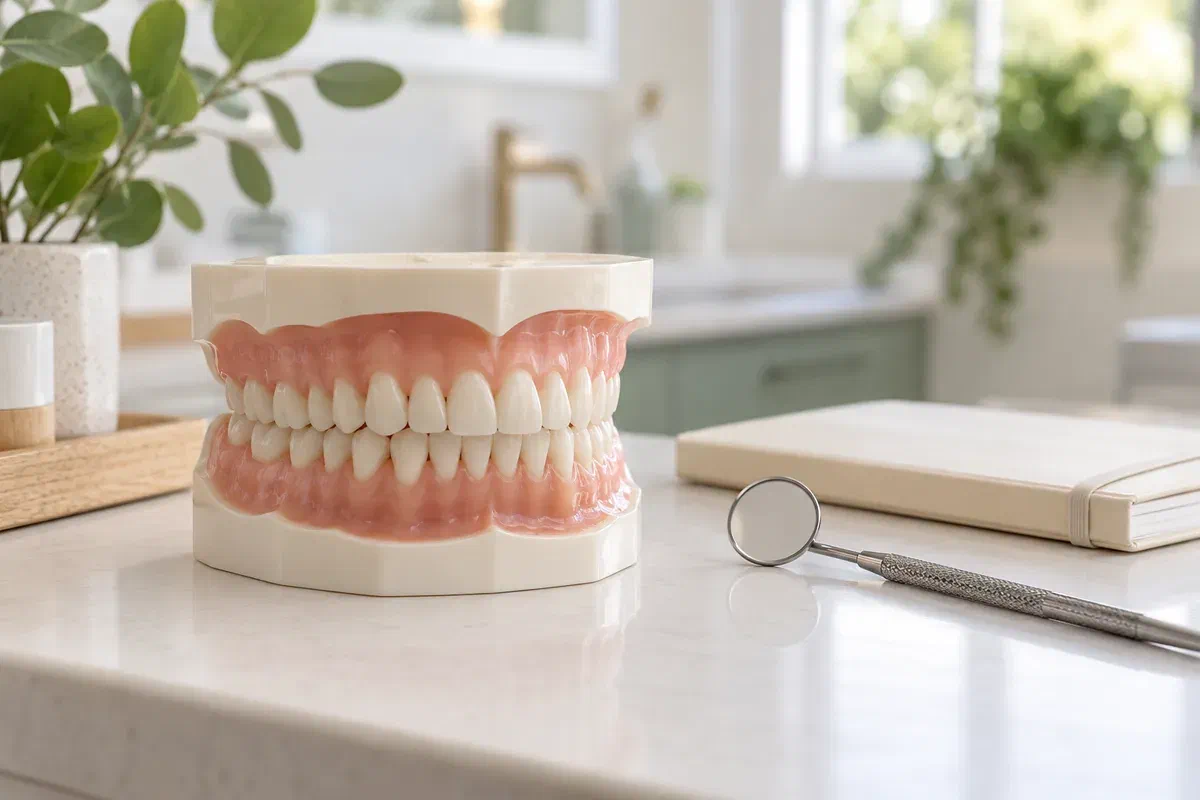
Illustrative supported dental teaching cast beside a mirror and closed notebook
Information that shapes the plan

Start with what you've noticed, then what you need.

Share when it began, what's changed, and whether symptoms are steady or occasional. Let us know about any limits on returning for follow-up. You don't need a diagnosis, and you won't be asked to repeat movements that hurt.

The ache: location, timing, triggers

Point to the sore spot and describe whether it shows up with chewing, opening, waking or without a pattern. Include any tooth that feels tender and facial pain elsewhere. That way the plan addresses the most likely sources instead of treating every pain near the ear as a joint issue.

Restriction, catching or a changed bite

Tell us whether your jaw catches, opens less, or closes in a way that feels unfamiliar, and whether this followed an injury. Please don't force it. A jaw that suddenly won't open or close normally needs a prompt phone call rather than a wait for the next booked slot.

Sounds and how much they bother you

Explain whether a click hurts, comes with locking or is simply noticeable. A noise alone doesn't decide treatment, and loudness isn't a sign of damage. It's interpreted with your movement, symptoms and history, which also guides how closely it needs following.

Phone soon if the jaw was recently hurt, if your face is noticeably swollen or you're running a fever, or if movement has suddenly become difficult. If you can't manage food or fluids, or have other serious symptoms, get urgent medical care nearby rather than booking a routine jaw visit.

What the visit should settle

A working explanation and a schedule you can live with

A careful assessment helps tell apart a dental cause, a muscle or joint pattern, and symptoms that need another provider. You should hear the reasoning in everyday language. Then comes the practical part: is monitoring enough, is simple care worth trying first, or does a specific question need more information before any recommendation?

The visit also gives you a reference point. With today's symptoms and limitations recorded, a review in a few weeks or months can show real change rather than impressions. The goal isn't a permanent label; it's a plan you understand, a timeframe for judging it and a clear signal for when to come back early.

Patient information: NIDCR — history, examination, and diagnostic considerations for TMD

Goals that reflect your daily life

Tell us what matters most, whether that's eating comfortably, sleeping without waking sore or simply understanding what's going on. These goals help decide how follow-up is structured and what success should look like.

An examination focused where it counts

Your account decides where attention goes: jaw movement, the joint area, the muscles at the cheek and temple, the teeth, or a mix. Mention it when a touch or movement brings back the ache you know, and when it feels like something new. Comfort comes first, so ask to pause whenever you need to.

Follow-up that's proportionate

If a test or referral is mentioned, ask what it would answer and whether it's needed now or only if things change. If monitoring is the plan, ask how long to watch, what to look for, and what would justify an earlier visit.

How the appointment is structured

Four stages, ending with a written-down next step

Mention limited opening or difficulty with longer visits when you book. Bring earlier imaging reports if they're easy to find, though a new symptom deserves advice now rather than after a search through old files.

  1. The history, including what you can manage

    We'll ask about onset, changes, injuries, dental and medical history, and anything you've tried for your jaw. Tell us what helped or made things worse. If you have limits on travel or time off, mention them so the plan can account for it.

  2. The examination

    The clinician checks the areas your history points to and observes how your jaw moves. You'll be asked whether anything feels tender or familiar. Speak up if something is uncomfortable; your concern counts without pushing through pain.

  3. What it all suggests

    Ask which findings matter most, what other explanations were considered and how firm the conclusions can be for now. Some questions need further investigation. A normal-looking exam doesn't mean your symptoms aren't genuine.

  4. The plan and its timeline

    Agree whether the next step is monitoring, conservative guidance, a test or a referral, and roughly when it should be reviewed. Ask who arranges what and how results are shared. Know which new symptoms mean calling sooner.

Living with the plan

Follow it, note what changes, and know when to call.

You may leave with things to try, a review booked or a referral to arrange. If you're unsure which part is optional or who is responsible for the next step, ask us to clarify.

Try the advice that fits your findings

Use any recommended comfort measures or changes within the limits discussed. Avoid adding forceful exercises or online tricks for repositioning the jaw. If something makes symptoms worse, stop and contact the provider.

Keep a simple record for the review

A short note every week or two about eating, opening and comfort, plus anything new, gives the review something solid. Avoid testing the jaw repeatedly; a practical summary is more useful than constant checking.

Book follow-up with your schedule in mind

Confirm when the review is due, who arranges any imaging or referral and who will explain results. If travel or timing is an issue, say so; the team can discuss what's practical.

Follow-up options

Watch, manage, or find out more

An assessment doesn't automatically lead to treatment. Ask why a path suits you and what result at review would mean changing direction.

When no active treatment is needed

Explanation with planned monitoring

A painless click or stable finding may be explained and reviewed later, with no device or procedure. Ask how long to monitor and what would count as meaningful change. Monitoring is planned, and new pain or lost movement should prompt a call.

When managing symptoms first makes sense

Conservative care with a review date

Practical measures may be suggested, with a set point to judge their effect on daily life. Ask what to try and when the review falls. When symptoms hang on past that point, or the original reasoning looks less convincing, the approach is reopened rather than simply repeated.

When a question needs more information

Further investigation or referral

When something stays unclear, the next step might be a specific image, your family doctor or a specialist, rather than more dental treatment. Ask what you'd learn, whether it could be done on a day that suits your travel, and who will talk you through it. A scan is only one piece next to your history and exam.

Puslinch follow-up questions

Planning the weeks after a jaw assessment

You're welcome to ask what a test can and can't show, and why a follow-up is suggested, before deciding on treatment.

(905) 876-4488
How many visits does a TMJ concern usually need?
It depends on the findings. Some concerns are settled with one visit and advice; others need a review or further assessment. Ask the clinician what to expect for your situation.
How long should I try a recommendation before deciding if it's working?
Ask the clinician for a reasonable timeframe based on your findings. Knowing roughly when to judge a change helps you avoid giving up too soon or carrying on too long.
What counts as a meaningful change to report?
New locking, reduced opening, pain that’s getting worse or a changed bite are all worth reporting. Ask the clinician which changes matter most in your case.
Can I call with a question instead of booking another visit?
Often, yes. Some questions can be answered by phone, while others need an examination. The team can let you know which applies.
What happens if the first plan doesn't help?
The plan can be revisited. Bring your notes to the review so the clinician can see what changed, and discuss whether a different approach, test or referral makes sense.
Will the clinic share my results with my family doctor?
Ask about this at your visit. With your consent, information can be shared with other providers involved in your care when it’s relevant.
Booking from Puslinch

Leave with a plan that fits your life.

Get in touch with Milton Dental Clinic about an aching or stiff jaw, a click that has started to bother you, or advice from somewhere else that you'd like looked at again. When you phone, mention any sudden restriction or a recent fall or blow, since either can change how soon you should come in and what sort of appointment makes sense.

Your follow-up could be a recheck, a few home measures, a test to arrange or a visit with another provider.

Visit Milton Dental Clinic
Unit 1, 342 Bronte St. S, Milton, ON L9T 5B7
Get directions Clinic hours
Monday–Thursday
11am–7pm
Friday–Sunday
By appointment only

Areas we serve

  • Milton
  • Oakville
  • Mississauga
  • Georgetown
  • Halton Hills
  • Acton
  • Campbellville
  • Brampton
  • Burlington
  • Puslinch
  • Rockwood
  • Erin
  • Caledon
  • Etobicoke
  • Old Milton
  • Bronte Meadows
  • Timberlea
  • Dorset Park
  • Dempsey
  • Clarke
  • Beaty
  • Coates
  • Harrison
  • Scott
  • Willmott
  • Ford
  • Bowes
  • Cobden
  • Walker
  • Mountain View
  • Milton Heights
  • Hawthorne Village
  • Valley View
  • Fallingbrook
  • Nassagaweya
  • Trafalgar
  • Esquesing
  • Nelson
  • Brookville
  • Moffat
  • Glen Williams
  • Norval
  • Limehouse
  • Stewarttown
  • Ashgrove
  • Hornby
  • Silver Creek
  • Speyside
  • Scotch Block
  • North Oakville
  • River Oaks
  • Glen Abbey
  • West Oak Trails
  • Palermo
  • Bronte Creek
  • College Park
  • Joshua Creek
  • Uptown Core
  • Preserve
  • Iroquois Ridge
  • Lisgar
  • Meadowvale
  • Meadowvale Village
  • Churchill Meadows
  • Erin Mills
  • Central Erin Mills
  • Streetsville
  • East Credit
  • Creditview
  • Heartland
  • Sheridan
  • Mount Pleasant
  • Credit Valley
  • Huttonville
  • Churchville
  • Springbrook
  • Northwest Brampton
  • Bram West
  • Fletcher's Meadow
  • Fletcher's Creek South
  • Alton Village
  • Orchard
  • Millcroft
  • Headon Forest
  • Tansley
  • Brant Hills
  • Tyandaga
  • Kilbride
  • Lowville
  • Aberfoyle
  • Morriston
  • Arkell
  • Hillsburgh
  • Freelton
  • Carlisle
  • Waterdown
  • Flamborough
  • Mountsberg

How can we help?

Milton Dental Clinic

Have a question about your smile? Choose the option that works best for you.

For urgent dental concerns, please call.
Messages are reviewed during clinic hours.