
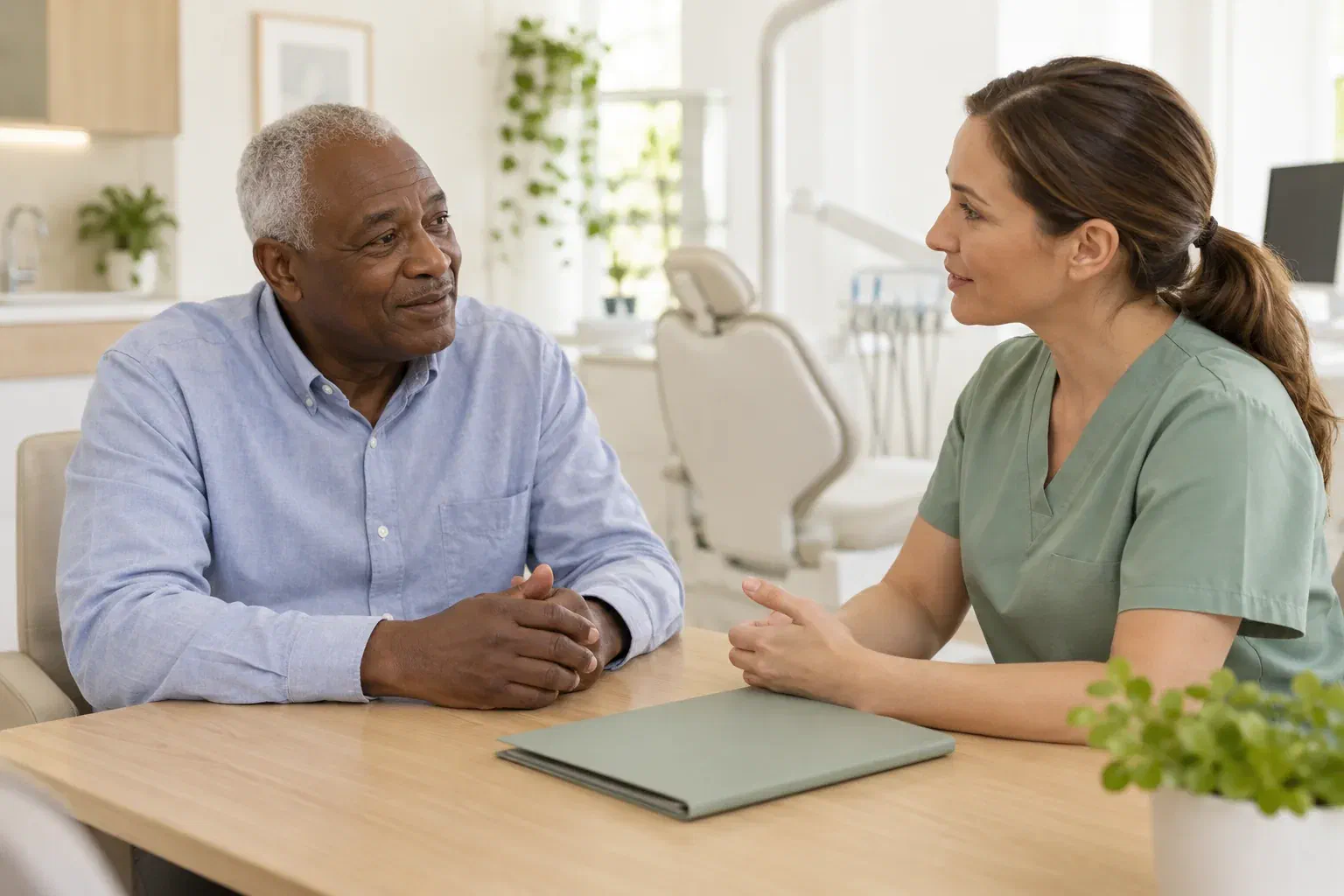
Illustrative consultation about jaw-joint movement and discomfort
Specialized Care

TMJ Assessment in Rockwood

Your back teeth don't seem to touch the way they did, or one side hits first. A changed bite is unsettling, and it's a good reason to book. For anyone travelling from Rockwood, a TMJ assessment looks at how the teeth meet, how the jaw moves and what your history suggests, then explains the choices ahead.

When your bite feels wrong

Teeth that suddenly don't fit together

People describe it in all sorts of ways. The teeth feel “off.” One side seems to land first. Chewing on the left feels clumsy. A bite change can come from the teeth themselves, such as a new filling, a cracked tooth or shifting after an extraction, but it can also be linked to the muscles or the jaw joints. Sorting out which is which is the point of an assessment.

The temporomandibular joints sit just ahead of your ears and, with the chewing muscles, position the lower jaw each time you close. If something changes in the joint or muscles, the way the teeth meet can feel different too. A TMJ assessment therefore looks at the bite, the joints, the muscles and your general health together, through careful questions and an examination rather than a single test.

When you call from Rockwood, tell us when you first noticed the change and whether anything happened around that time: dental work, an injury, new symptoms. Bring old reports, appliances or notes on previous advice. We'll choose an examination that fits, and say clearly when another dentist, a physician or a specialist could help answer what's left.

Get your changed bite checked
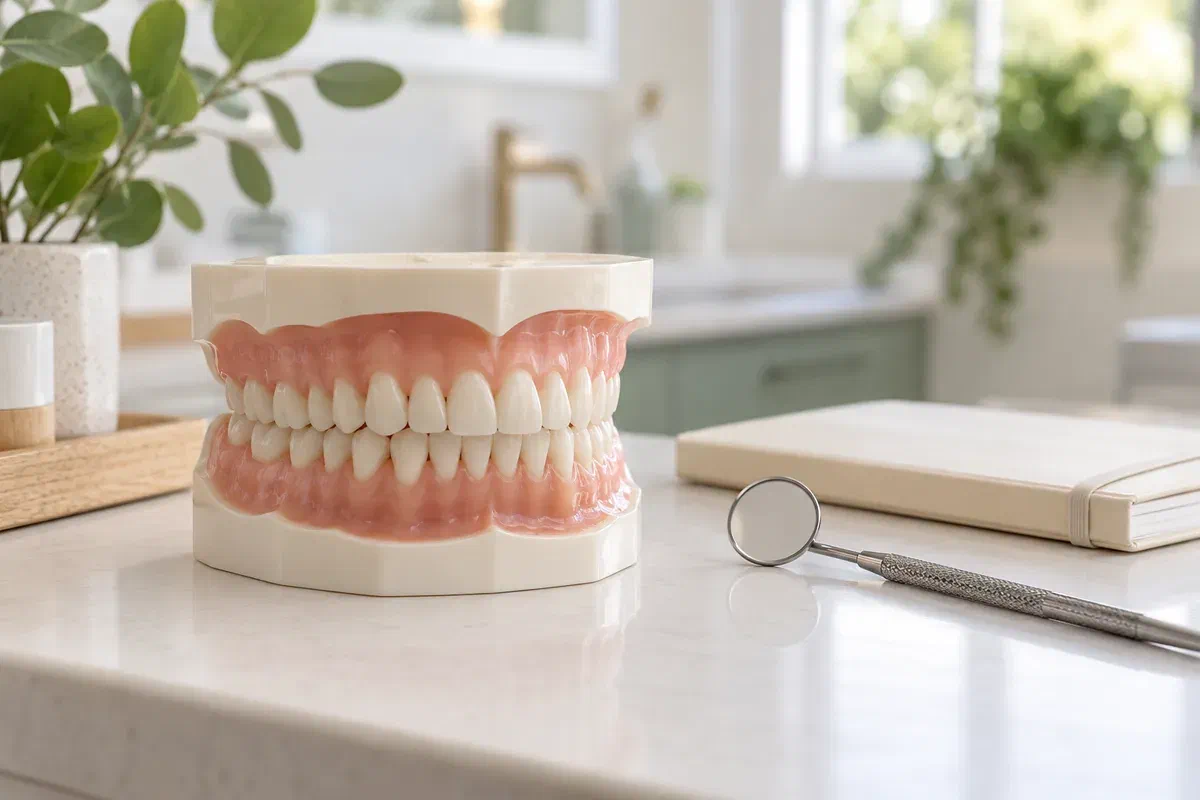
Illustrative supported dental teaching cast beside a mirror and closed notebook
Questions we'll ask about the change

Sudden or gradual? One side or both?

The timing and character of a bite change are among the most useful clues. You don't need to know the cause, and please don't keep clenching or tapping your teeth to test it before the visit.

Any pain that came with the change

Note where it aches and whether it appears with chewing, opening, waking or on its own. Mention a single tooth that feels high, tender or sensitive. These details help the clinician weigh dental causes against muscle or joint ones rather than assuming the joint is responsible.

How the teeth meet and how the jaw moves

Describe which teeth touch first, whether the change is constant, and whether opening or closing feels restricted or catches. Mention any recent injury or dental work. Don't force your jaw to show us. If your teeth suddenly won't meet at all, or the jaw won't open or close, call right away.

Sounds around the joint

Tell us whether a click or grinding sound started around the same time as the bite change, and whether it hurts. A noise alone doesn't mean you need treatment, and loudness isn't a sign of how serious things are. It's considered alongside everything else.

A bite that changes suddenly after a blow to the face, or with swelling, fever or difficulty moving the jaw, needs prompt attention. Seek urgent medical care if you can't eat or drink or have other serious symptoms.

What the assessment helps untangle

Is the change in the teeth, the jaw, or both?

A changed bite can have very different explanations, and an assessment helps narrow them down. Some are dental and fairly simple to address; some involve the muscles or joint; a few need input from a physician or specialist. Ask the clinician to explain their reasoning plainly. The next step might be a dental adjustment, a period of monitoring, conservative care, or more information before any recommendation.

It also records how your teeth meet today. If the bite keeps shifting, or settles back, that baseline makes later comparisons far more meaningful. The aim isn't to fix a label on you after one visit. It's to give you an understandable plan and a clear time to look again.

Patient information: NIDCR — history, examination, and diagnostic considerations for TMD

What the change means for eating and comfort

Tell us what's become awkward, such as biting through a sandwich, chewing on one side or keeping your teeth together comfortably. Those practical details help more than a pain score and shape the goals of whatever comes next.

An examination of bite, joints and muscles together

The clinician may check how your teeth meet, how the jaw moves, and the joints and chewing muscles. Tell them when something reproduces your usual discomfort. The examination is kept comfortable, with breaks when you need them.

A reasoned approach before changing any teeth

Ask why a particular step is suggested and what it would answer. Adjusting teeth is not always the right first move when the joint or muscles might be involved. If monitoring is chosen, ask what change would bring you back early.

Step by step

How we look into a changed bite

Let us know if opening is limited or a long visit would be difficult. Earlier dental records and imaging reports are helpful, but a sudden bite change is worth discussing now, not after you've found every file.

  1. When it changed and what happened around then

    We'll ask about the timing, any recent fillings, crowns or extractions, injuries, health conditions and medications, and anything you've tried. Mention whether the change is constant or comes and goes, and what makes it better or worse.

  2. Checking the bite and jaw movement

    The clinician looks at how your teeth come together, watches the jaw open and move side to side, and checks the joints and muscles as relevant. You'll be asked whether anything feels familiar or tender. Say stop if it's uncomfortable.

  3. Explaining what seems to be going on

    Ask what the findings point to, what other causes were considered and how sure anyone can be at this point. Some bite changes need further investigation before a clear answer. Findings that look normal don't mean your bite change isn't real.

  4. Deciding on a careful next step

    Options may include monitoring, conservative care, a dental check of a specific tooth, imaging or a referral. Make sure you know who arranges each part and how you'll hear results. Agree on which changes mean calling before the review.

After your visit

Avoid testing the bite and report real changes.

You might leave with advice, a review appointment or a referral. If you're unsure which step comes first, which is optional or who's arranging it, ask before leaving.

Follow the advice for your findings

Use any comfort or eating changes within the limits discussed. Don't try to file, push or reposition teeth or your jaw at home, and skip online jaw exercises unless advised. If something makes it worse, stop and contact the provider.

Notice the bite without constant checking

It's natural to keep tapping your teeth to see if the bite is back to normal, but that can keep muscles tense. Instead, jot down once a week how eating and comfort feel and whether anything new has appeared.

Complete the agreed follow-up

Confirm how imaging or another appointment will be arranged and who will explain the findings. Tell us if timing or the trip from Rockwood is a problem, so it can be planned around. Nothing recommended to you should simply trail off; every suggestion ought to end with a booked step or a clear answer.

What may follow

Careful steps, chosen for the likely cause

An assessment doesn't automatically mean treatment or changes to your teeth. Ask why a step fits and what would lead to reconsidering it.

When the change is mild or settling

Explanation and monitoring

Small bite changes sometimes ease on their own as tense muscles relax or a sore tooth settles. In that case the plan may be to explain what's likely happening and look again in a while, without drilling, adjusting or fitting anything. Ask how long to give it. Choosing to wait is still a decision, and a bite that keeps shifting should bring you back.

When a simple approach makes sense first

Conservative care or a targeted dental check

If one tooth looks like the obvious cause, such as a high new filling, checking that tooth may come first. Otherwise, practical comfort measures and a later look at how your teeth meet are a common starting point. Know what to expect and when you're due back. If the bite won't settle, the plan changes with it.

When the cause isn't clear yet

Imaging or another provider's assessment

Sometimes an image or a medical or specialist opinion helps explain a bite change better than any dental adjustment. Ask what you'd learn and who will go through it with you. Images are read with your symptoms and examination.

Rockwood bite questions

When your teeth stop meeting the way they used to

Ask what an examination can show and why a recommendation is made before agreeing to any treatment, especially anything that changes your teeth.

(905) 876-4488
Can a new filling make my bite feel uneven?
Yes, a new filling or crown can sometimes feel high. Mention any recent dental work, as a simple check of that tooth may be all that’s needed. If jaw symptoms are present too, the clinician will consider both.
Why would my bite change without any dental work?
There are several possibilities, including teeth drifting after a gap, wear, muscle tension or changes in the joint. The assessment considers these together rather than assuming one cause, and your history often narrows the list quickly.
Should my teeth be adjusted to fix my bite?
Not automatically. Adjusting teeth is permanent and isn’t always the right first step, especially if muscles or joints may be involved. Ask why it’s suggested and what alternatives exist.
Can clenching make my bite feel different?
Tense chewing muscles can sometimes change how the bite feels. Mention clenching, grinding or stress, and the clinician can consider this with the rest of the findings.
Is a sudden bite change an emergency?
A sudden change after an injury, or with swelling, fever or inability to open or close, needs prompt attention. A gradual or mild change can usually be booked as a regular assessment.
Will orthodontics be suggested for a changed bite?
Only if it suits your findings and goals. A changed bite has many possible causes, and the clinician should explain why any particular approach would be appropriate.
From Rockwood

Something feels off when you close? Let's find out why.

Contact Milton Dental Clinic about a bite that feels different, jaw discomfort or changes in movement. If the change was sudden, followed an injury, or your jaw has locked, mention it when you call so we can discuss urgency.

The outcome may be monitoring, conservative care, a targeted dental check, further investigation or a referral.

Visit Milton Dental Clinic
Unit 1, 342 Bronte St. S, Milton, ON L9T 5B7
Get directions Clinic hours
Monday–Thursday
11am–7pm
Friday–Sunday
By appointment only

Areas we serve

  • Milton
  • Oakville
  • Mississauga
  • Georgetown
  • Halton Hills
  • Acton
  • Campbellville
  • Brampton
  • Burlington
  • Puslinch
  • Rockwood
  • Erin
  • Caledon
  • Etobicoke
  • Old Milton
  • Bronte Meadows
  • Timberlea
  • Dorset Park
  • Dempsey
  • Clarke
  • Beaty
  • Coates
  • Harrison
  • Scott
  • Willmott
  • Ford
  • Bowes
  • Cobden
  • Walker
  • Mountain View
  • Milton Heights
  • Hawthorne Village
  • Valley View
  • Fallingbrook
  • Nassagaweya
  • Trafalgar
  • Esquesing
  • Nelson
  • Brookville
  • Moffat
  • Glen Williams
  • Norval
  • Limehouse
  • Stewarttown
  • Ashgrove
  • Hornby
  • Silver Creek
  • Speyside
  • Scotch Block
  • North Oakville
  • River Oaks
  • Glen Abbey
  • West Oak Trails
  • Palermo
  • Bronte Creek
  • College Park
  • Joshua Creek
  • Uptown Core
  • Preserve
  • Iroquois Ridge
  • Lisgar
  • Meadowvale
  • Meadowvale Village
  • Churchill Meadows
  • Erin Mills
  • Central Erin Mills
  • Streetsville
  • East Credit
  • Creditview
  • Heartland
  • Sheridan
  • Mount Pleasant
  • Credit Valley
  • Huttonville
  • Churchville
  • Springbrook
  • Northwest Brampton
  • Bram West
  • Fletcher's Meadow
  • Fletcher's Creek South
  • Alton Village
  • Orchard
  • Millcroft
  • Headon Forest
  • Tansley
  • Brant Hills
  • Tyandaga
  • Kilbride
  • Lowville
  • Aberfoyle
  • Morriston
  • Arkell
  • Hillsburgh
  • Freelton
  • Carlisle
  • Waterdown
  • Flamborough
  • Mountsberg

How can we help?

Milton Dental Clinic

Have a question about your smile? Choose the option that works best for you.

For urgent dental concerns, please call.
Messages are reviewed during clinic hours.