

Illustrative conversation between a patient and dental clinician about a suspected infection
Specialized Care

Treatment for a Dental Infection in Campbellville

Tooth trouble has a way of starting on a Thursday evening. From Campbellville, knowing our hours, what to say when you call and which signs can’t wait for a weekday helps you get a suspected infection assessed and treated at its source.

Campbellville · timing your call

It started just as the weekend began.

Living on the rural side of Milton, near the escarpment, you probably plan trips into town around several errands. A tooth that starts aching on a Thursday evening, or a gum that swells on a Friday afternoon, upsets that rhythm. Our regular hours run Monday to Thursday, 11am to 7pm, with Friday to Sunday by appointment only, so it helps to know ahead of time what counts as urgent.

Most suspected infections fall somewhere in the middle: a tooth that throbs or hurts to chew, a recurring bump on the gum, a bad taste on one side. These deserve a prompt assessment, because relief from pain medicine or a bump that drains doesn’t mean the source has gone. Whether the trouble lies inside the tooth, in the gum and bone around it, or elsewhere is what the examination works out.

Phone us from Campbellville as soon as you notice a change, even if you hope it will settle. Explain the timeline and whether you feel unwell. We will talk about when you might be seen at our Bronte Street practice, what we can assess, and when an urgent dental service or hospital is the right place instead. A diagnosis is our job.

Call about a tooth before the weekend
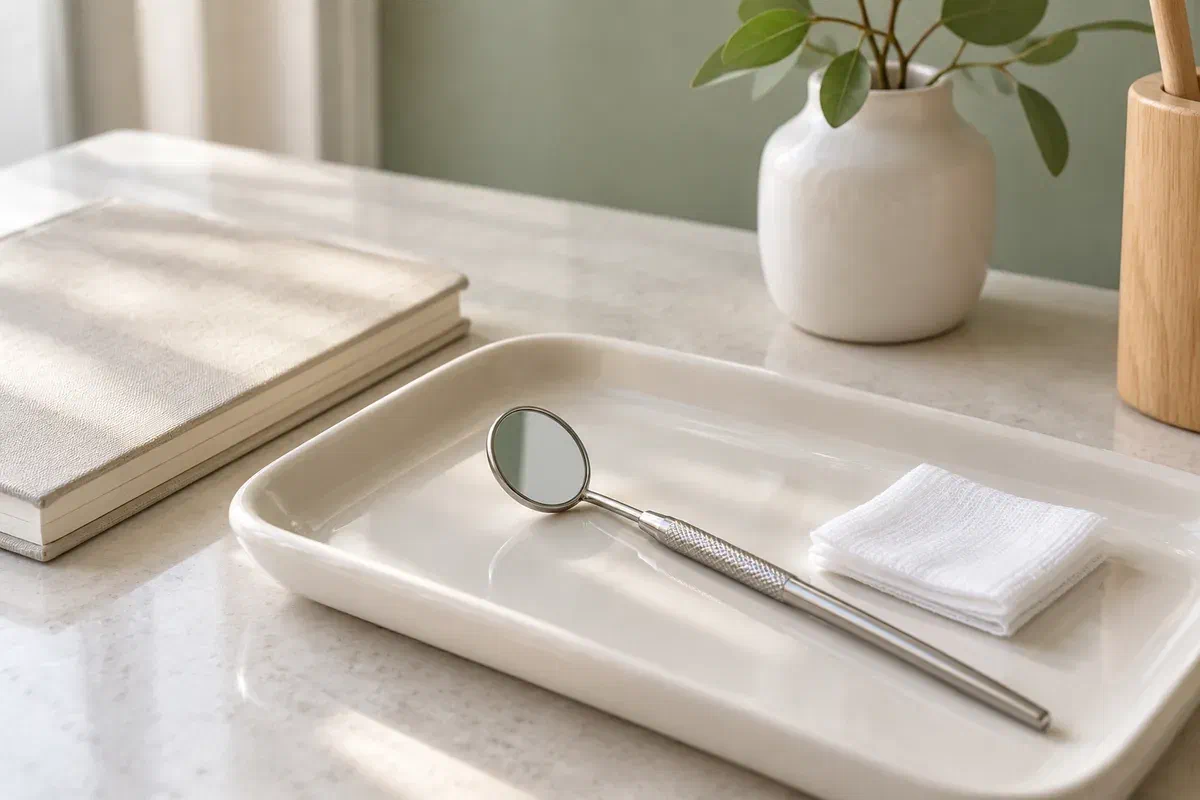
Illustrative examination mirror and clean gauze prepared beside a consultation notebook
What decides how soon

Tell us about the tooth, the swelling and you.

Walk us through the days since it started. A recent filling or extraction, a prescription you have begun, and any advice from a pharmacist or doctor are all useful to hear.

The tooth itself

Does it ache without warning, flare on chewing, or linger after something hot or cold? Has a piece broken off, or was work done nearby recently? Pain level is a poor guide on its own, since a crack or inflamed nerve can hurt as much as an infection and still need care.

Swelling, discharge or a recurring bump

Say where the swelling started and whether it is growing by the hour, coming and going, or spreading into the cheek, jaw or under the chin. A bump that drains is still a reason to be seen. Please leave it alone rather than squeezing or piercing it.

How unwell you feel

Fever, chills, feeling washed out, a jaw that won’t open fully, or difficulty eating and drinking can move a problem from ‘book soon’ to ‘be seen today’. Mention any condition or medicine that weakens your immune system on the first call.

Dial 911 for trouble breathing or anything life-threatening. Difficulty swallowing, swelling of the face or mouth that is large or spreading quickly, swelling around an eye, or changed vision need emergency assessment immediately, any day of the week. Don’t wait for an online reply.

What a good plan looks like

Short-term comfort, and a route to the finish

Every step should connect to something the clinician found. At the first visit, ask whether the goal is to relieve the pressure, complete treatment, or arrange specialist care. That way a quieter weekend doesn’t become the reason further treatment never happens.

You should also understand the tooth’s realistic options and what follows. Ask whether it can likely be kept, how many visits each choice involves, what recovery is like, the cost, and how much time you’ll need away from work or the farm. Asking those questions while you are sore is entirely reasonable.

Patient information: NHS — dental abscess symptoms and emergency warning signs · American Dental Association — antibiotics and treatment of dental pain and swelling

An explanation tied to evidence

Find out which tooth or tissue appears to be the cause and what supports that conclusion, from tests to X-rays. When there is real uncertainty, the clinician should say what further information is needed before suggesting anything permanent.

First aid kept separate from definitive care

An initial step may ease things while more treatment is required. Ask what was completed, what is still outstanding and when it should happen. A written note helps you plan trips into town and any time off.

Follow-up that suits a rural schedule

Know who to contact if symptoms change after hours, how a referral would be arranged and when you should be reviewed. Mention transport, timing or cost limits early, so appointments can be grouped or planned around them.

The visit itself

Questions first, then a careful look

Bring a written list of medicines and allergies, plus anything you know about recent dental or medical treatment. Pregnancy, immune concerns and earlier difficulty with dental care are all worth mentioning so the clinician can plan accordingly.

  1. Going over symptoms and health

    Expect to be asked when the problem began, how it has changed, and whether there has been swelling, discharge, fever or jaw stiffness. Mention what you have taken and who recommended it. The clinician also judges whether care belongs in the dental chair or somewhere more urgent.

  2. Locating the source

    The suspected tooth, nearby teeth and gums may be examined, with suitable tests or radiographs. Say if anything is uncomfortable. Linking what you describe to what is found keeps treatment from being chosen simply because one area looks swollen.

  3. Talking through treatment

    Depending on the diagnosis, care may mean draining an abscess, treating the inside of the tooth, treating the gum and bone, or extraction. Ask about other options, the prospects of keeping the tooth, and whether an endodontist or other specialist would add something. Comfort and consent are discussed first.

  4. Medicine and the next appointment

    If a prescription is advised, ask what it is meant to do and how to take it. Antibiotics are not a stand-in for treating the cause; they are used when, for example, infection is spreading or your health puts you at extra risk. Know your plan if symptoms worsen over a weekend.

After you get home

Quieter doesn’t mean finished.

Instructions depend on what was done. Draining an abscess, starting root canal care, treating the gum and removing a tooth each need different aftercare. Ask for the advice that fits your visit, and write it down if that helps.

Use medicine exactly as directed

Follow the instructions and ask a pharmacist about interactions. Avoid antibiotics left over from an earlier illness, don’t share prescriptions, and keep pain relief within the recommended limits. Report side effects promptly; seek emergency help for breathing trouble or a serious allergic reaction.

Protect the treated spot

Ask what you can eat, when you can chew on that side and how to keep a temporary filling or extraction site clean. Avoid hard food as a test. If a temporary filling dislodges or you are unsure about the instructions, call the treating office.

Return to complete or review care

Check whether more canal work, a permanent crown or filling, a gum recheck or a referral is still needed. Report pain or swelling that returns. If the appointment no longer works, call to rearrange rather than letting treatment stall.

Treatment choices

Same ache, different cause, different care

Ask what each option would accomplish and how many visits it would take. The decision depends on the diagnosis, how much healthy tooth and supporting bone remain, and your preferences once everything is explained.

When infection started in the canals of a tooth that can be kept

Treating the inside of the tooth, then restoring it

Root canal treatment may be suggested if the pulp is the origin and there is enough tooth to rebuild. Ask about every stage, including the permanent filling or crown and any specialist opinion. Treating the canals and restoring the tooth are one plan, and outcomes depend on your findings.

When the gum around the tooth is the problem

Gum and supporting tissue care

A periodontal infection may need local treatment and a longer-term plan for gum health. Ask how the tooth’s bone support will be measured and when. Gum soreness on its own isn’t a reason for root canal treatment.

When retention isn’t sensible or care is complex

Extraction or referral

If the tooth can’t be reliably restored, removing it may be the better choice. Ask for the reasons, what the appointment is like and how the gap could be managed later. If another provider is needed, clarify urgency and interim instructions.

Patient information: American Association of Endodontists — abscessed teeth · American Association of Endodontists — root canal treatment and restoration

Questions about timing

After hours, weekends and waiting

The examination is what should guide treatment. These answers can help you decide when to call and how to prepare, but a worrying change needs direct advice.

(905) 876-4488
What should I do if a tooth infection flares up on a Saturday?
Call us, since weekend visits may be possible by appointment. If you can’t reach us and symptoms are significant, contact another emergency dental provider. Spreading swelling or trouble swallowing or breathing needs emergency medical care.
Is over-the-counter pain relief safe while I wait to be seen?
Many people can use common pain relievers as directed on the package, but check with a pharmacist if you have health conditions or take other medicines. Don’t exceed recommended doses, and don’t place tablets against the gum.
Can I use ice or a cold compress for a swollen jaw?
A cold compress on the outside of the cheek for short periods may ease discomfort. It doesn’t treat infection. If swelling grows or you develop a fever, seek prompt care.
Should I wait to see if a small gum swelling goes down before calling?
It is better to call. Small swellings can drain and return, and the source still needs assessment. We can help decide how soon you should be seen.
Will I need more than one visit for an infected tooth?
Often, yes. A first appointment may relieve symptoms and confirm the cause, with root canal treatment, a crown, gum care or an extraction completed afterwards. Ask for an outline so you can plan trips.
How should someone in Campbellville decide between waiting and going to hospital?
Go to hospital or call 911 for breathing difficulty, trouble swallowing, swelling near the eye, or swelling that spreads quickly. For a sore tooth with stable, limited swelling, call a dental office for advice first.
From Campbellville

Call early, before the problem grows.

Phone Milton Dental Clinic, describe what has changed with the tooth and mention any swelling or fever. If we can’t be reached and the problem is urgent, contact another available emergency dental office. Save our online booking and email for things that can wait.

We confirm treatment only after assessing you; availability and setting depend on the situation.

Visit Milton Dental Clinic
Unit 1, 342 Bronte St. S, Milton, ON L9T 5B7
Get directions Clinic hours
Monday–Thursday
11am–7pm
Friday–Sunday
By appointment only

Areas we serve

  • Milton
  • Oakville
  • Mississauga
  • Georgetown
  • Halton Hills
  • Acton
  • Campbellville
  • Brampton
  • Burlington
  • Puslinch
  • Rockwood
  • Erin
  • Caledon
  • Etobicoke
  • Old Milton
  • Bronte Meadows
  • Timberlea
  • Dorset Park
  • Dempsey
  • Clarke
  • Beaty
  • Coates
  • Harrison
  • Scott
  • Willmott
  • Ford
  • Bowes
  • Cobden
  • Walker
  • Mountain View
  • Milton Heights
  • Hawthorne Village
  • Valley View
  • Fallingbrook
  • Nassagaweya
  • Trafalgar
  • Esquesing
  • Nelson
  • Brookville
  • Moffat
  • Glen Williams
  • Norval
  • Limehouse
  • Stewarttown
  • Ashgrove
  • Hornby
  • Silver Creek
  • Speyside
  • Scotch Block
  • North Oakville
  • River Oaks
  • Glen Abbey
  • West Oak Trails
  • Palermo
  • Bronte Creek
  • College Park
  • Joshua Creek
  • Uptown Core
  • Preserve
  • Iroquois Ridge
  • Lisgar
  • Meadowvale
  • Meadowvale Village
  • Churchill Meadows
  • Erin Mills
  • Central Erin Mills
  • Streetsville
  • East Credit
  • Creditview
  • Heartland
  • Sheridan
  • Mount Pleasant
  • Credit Valley
  • Huttonville
  • Churchville
  • Springbrook
  • Northwest Brampton
  • Bram West
  • Fletcher's Meadow
  • Fletcher's Creek South
  • Alton Village
  • Orchard
  • Millcroft
  • Headon Forest
  • Tansley
  • Brant Hills
  • Tyandaga
  • Kilbride
  • Lowville
  • Aberfoyle
  • Morriston
  • Arkell
  • Hillsburgh
  • Freelton
  • Carlisle
  • Waterdown
  • Flamborough
  • Mountsberg

How can we help?

Milton Dental Clinic

Have a question about your smile? Choose the option that works best for you.

For urgent dental concerns, please call.
Messages are reviewed during clinic hours.